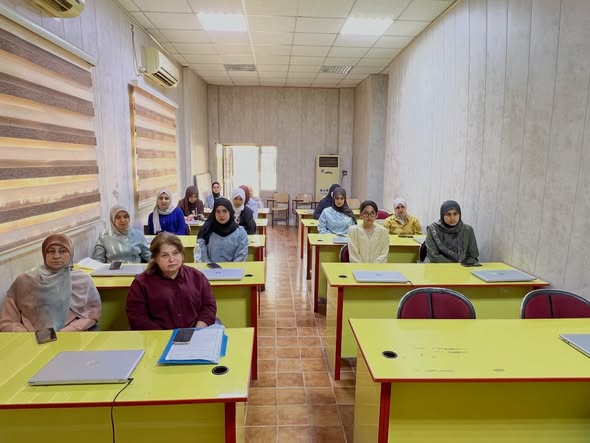
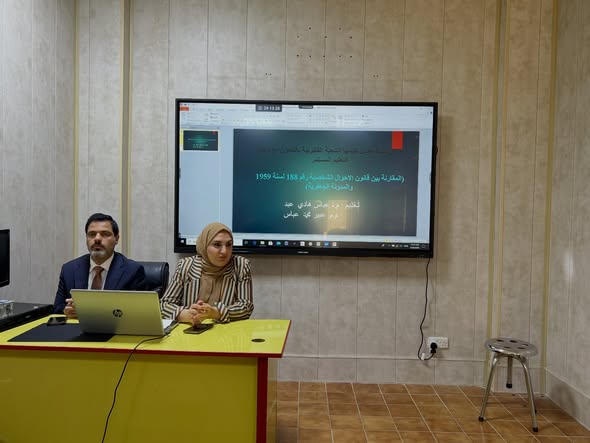
Under the patronage of the Dean of the College of Science for Women, Professor Dr. Sameera Naji Khdim, the Continuing Education Unit, in cooperation with the Legal Division, organized a workshop entitled “A Comparison between the Iraqi Personal Status Law No. (188) of 1959 and the Ja’fari Personal Status Code.” The workshop was presented by Dr. Abbas Hadi Abd and Ms. Abeer Mohammed Abbas. It was held in Abdul Hakim Hall and attended by a number of faculty members, staff, and students.
The workshop aimed to highlight several important themes, most notably a comparative analysis of the Iraqi Personal Status Law of 1959 and the Ja’fari Personal Status Code, with particular emphasis on issues related to marriage, divorce, and child custody. It also sought to clarify the similarities and differences between the two frameworks from both legal and jurisprudential perspectives.
The presenters explained that the Iraqi Personal Status Law No. (188) of 1959 is based on a combination of various Islamic schools of jurisprudence while also incorporating elements of modern legal reasoning and judicial interpretation. In contrast, the Ja’fari Personal Status Code primarily relies on Ja’fari jurisprudence (the Ja’fari school of Islamic law) in addressing personal status matters.
Regarding marriage, the workshop clarified that Law No. (188) sets the legal age of marriage at eighteen years, with limited exceptions that require judicial authorization. By contrast, the Ja’fari Personal Status Code permits the marriage of girls below the age of eighteen in accordance with the jurisprudential regulations and conditions established within the Ja’fari legal tradition.
Concerning divorce, it was noted that Law No. (188) requires divorce proceedings to be conducted through the court system. The Ja’fari Personal Status Code, on the other hand, also regulates divorce according to specific religious provisions derived from Ja’fari jurisprudence, although differences exist in certain procedures and legal details.
With regard to polygamy, the workshop examined the distinctions between the two legal frameworks. It also addressed the issue of child custody, focusing on the best interests and rights of the child and highlighting differences in the conditions and duration of custody under each system.
The organizers emphasized the importance of promoting legal awareness within society and creating opportunities for a deeper understanding of the differences between legal and jurisprudential frameworks. The workshop concluded with an interactive discussion session during which participants raised questions and inquiries that were addressed by the presenters and organizers.