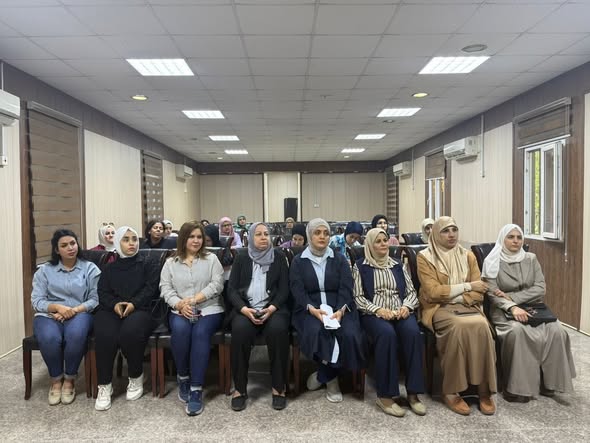
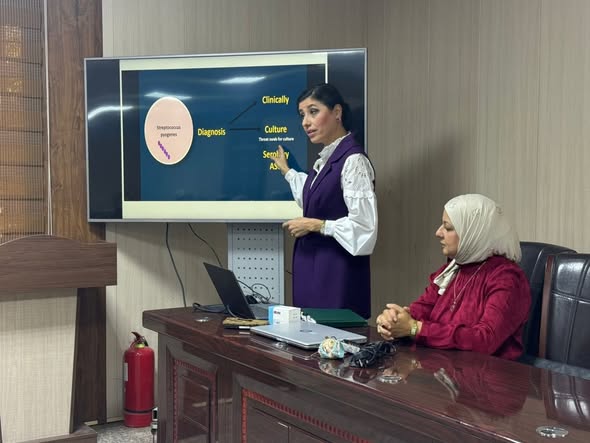
Under the patronage of the Dean of the College of Science for Women, Professor Dr. Sameera Naji Khdim, the Continuing Education Unit, in cooperation with the Department of Biology, organized a workshop entitled “Anti-Streptolysin O (ASO) Test and Immune Diseases.” The workshop was presented by Dr. Rasha Majid Abdul Ameer and Dr. Reem Mohammed Ubaid in the Hospitality Hall, with the attendance of a number of faculty members, staff members, and students.
The workshop provided a detailed explanation of the Anti-Streptolysin O (ASO) test, including its scientific basis and procedural methodology. The ASO test is considered one of the most important serological investigations used to measure the level of antibodies produced by the immune system in response to infection with streptococcal bacteria. The presenters reviewed the various laboratory techniques employed in conducting the test, including agglutination methods and quantitative measurement procedures. The practical workflow was also explained comprehensively, beginning with specimen collection and extending to the accurate interpretation of laboratory results.
Furthermore, the workshop highlighted the significance of the ASO test in the diagnosis and monitoring of certain immune-mediated diseases associated with streptococcal infections, such as rheumatic fever and glomerulonephritis. Particular emphasis was placed on the importance of correlating laboratory findings with the patient’s clinical condition to ensure accurate diagnosis and effective disease management.
During the workshop, the presenters emphasized the value of such scientific activities in enhancing the knowledge and practical skills of students and academic staff, while also keeping pace with contemporary developments in the fields of clinical laboratory diagnostics and immunological diseases.
The event witnessed active interaction between the attendees and the workshop organizers through a discussion session in which participants raised questions that were addressed comprehensively by the presenters. It is worth noting that organizing such activities contributes to the achievement of the United Nations Sustainable Development Goals (SDGs), particularly Goal 3: Good Health and Well-Being, and Goal 4: Quality Education.