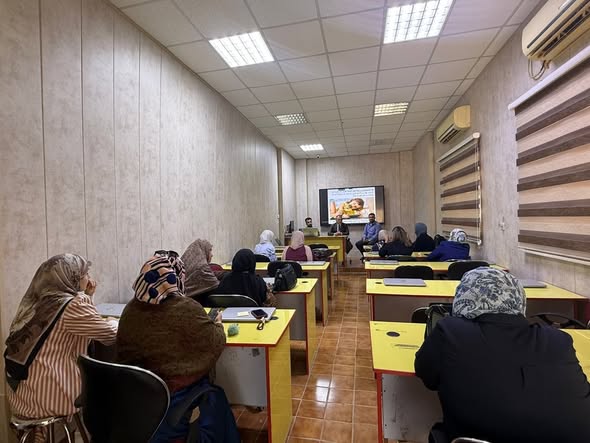

Under the patronage of the Dean of the College of Science for Women, Professor Dr. Sameera Naji Khdim, the Continuing Education Unit, in collaboration with the Department of Chemistry, organized a workshop entitled “Child Health and Electronic Devices.” The workshop was presented by Dr. Abbas Ali Saleh, Dr. Fadhil Ibrahim Hussein, and Mr. Amer Hamid Hussein. It was held in the Abdul Hakim Hall and attended by a number of faculty members, staff, and students.
The workshop aimed to highlight the impact of electronic devices on children’s health from various perspectives, including physical, psychological, and behavioral aspects. It also emphasized the importance of parental and family awareness in preventing potential harm to children resulting from excessive or inappropriate use of such devices.
The workshop began with an explanation of the physical health risks associated with prolonged use of electronic devices, particularly among children who spend extended periods playing electronic games or browsing digital content. Such practices may lead to neck and back pain, as prolonged poor posture can cause spinal problems and chronic musculoskeletal disorders. Furthermore, excessive screen time reduces physical activity and increases the risk of obesity, as spending long hours in front of computer or smartphone screens limits movement and may contribute to obesity and future cardiovascular problems.
The presenters then discussed the psychological effects of excessive electronic device use on children. Socially, children may become isolated and less engaged with family members and peers, leading to delays in the development of communication and interpersonal skills. In addition, exposure to inappropriate or excessive content, such as horror, violence, or other disturbing materials, may increase levels of anxiety, stress, fear, and depression.
The workshop also addressed behavioral consequences associated with addiction to electronic games and social media platforms. Such addiction can negatively affect children’s daily lives and academic performance by reducing their levels of concentration and attention.
The organizers emphasized the necessity of parental supervision and monitoring of children’s activities, as well as limiting the amount of time children and adolescents spend using mobile phones and digital screens. They recommended encouraging young people to engage in physical exercise, reading, learning, and cultural activities as effective means of protecting them from the adverse effects of excessive and unsupervised device use.
The workshop concluded with active interaction and discussion between the attendees and the presenters, reflecting the participants’ interest in the topic and the importance of raising awareness about the responsible use of electronic devices among children.