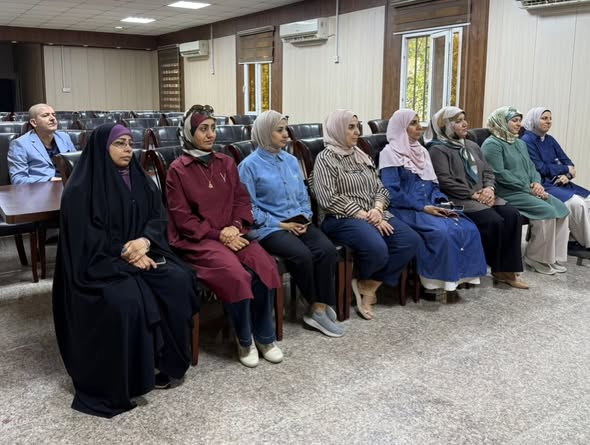
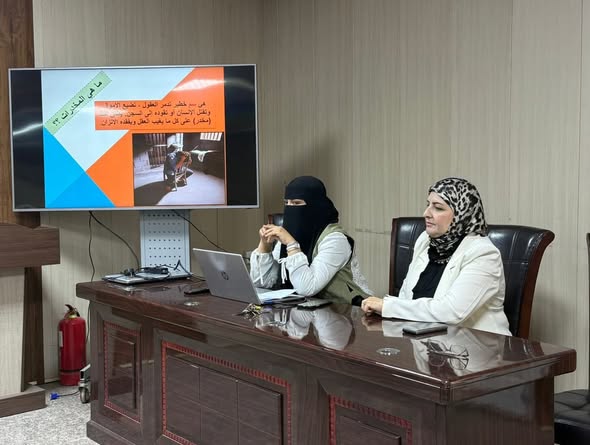
A workshop entitled “Towards a Drug-Free Society: The Role of Institutions and Families” was organized by the Continuing Education Unit under the patronage of the Dean of the College of Science for Women, Professor Dr. Sameera Naji Khdim. The Women’s Affairs Unit, in collaboration with the Continuing Education Unit, held the workshop, which was presented by Dr. Shaimaa Saleh Mahdi, Head of the Women’s Affairs Unit, and Ms. Intisar Abbas Hamad from the Department of Physics. The event was attended by a number of faculty members, staff, and female students.
The workshop addressed the issue of drug abuse as one of the most serious challenges facing societies due to its detrimental effects on individuals, families, and communities. It also highlighted the underlying causes contributing to the spread of this phenomenon, including psychological and social factors, as well as a lack of awareness.
Furthermore, the workshop outlined the common types of drugs, including natural, synthetic, and semi-synthetic substances, and examined their effects on the nervous system. It also explored the impact of these substances on hormonal balance in the body, with particular reference to what are known as “addiction-related hormones,” including dopamine, serotonin, and oxytocin. Dopamine, a neurotransmitter released by the brain’s reward centers during experiences of pleasure or comfort, reinforces repetitive behaviors and may lead to addiction. Serotonin plays a key role in regulating mood and promoting psychological stability, while oxytocin is associated with social bonding and interpersonal relationships. Disruptions in these hormones as a result of drug use may lead to adverse psychological and physiological effects.
The workshop further emphasized the pivotal role of educational institutions in raising awareness and promoting preventive education, alongside the crucial role of the family in monitoring, guiding, and instilling positive values in young individuals, thereby contributing to the prevention of behavioral deviations. It underscored the importance of awareness campaigns and cooperation among various institutions, as well as the need to foster a healthy and safe environment that supports youth and protects them from falling into this serious social problem.
The workshop concluded by emphasizing the importance of enhancing awareness among students and the wider community regarding the dangers of drug abuse, and strengthening the role of institutions and families in prevention efforts and in supporting societal stability.