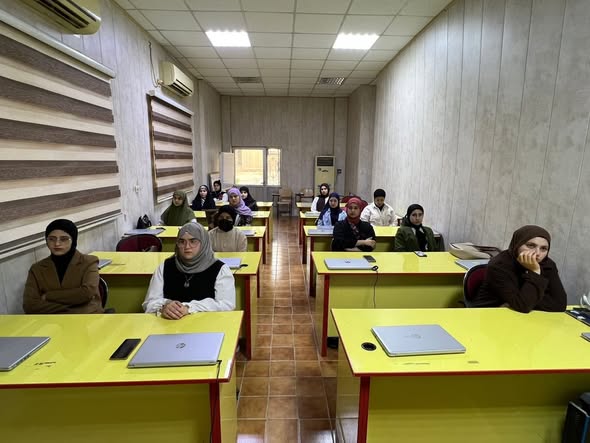
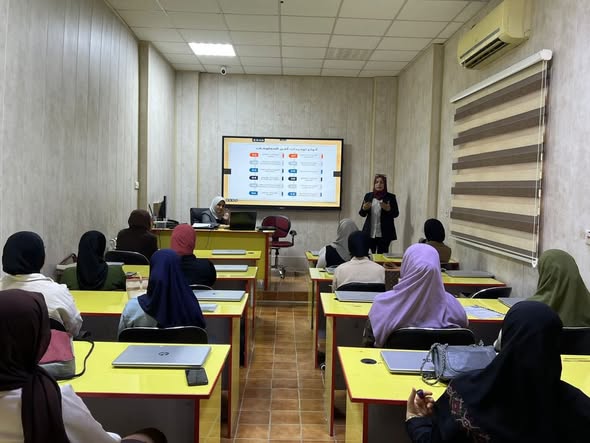
Under the patronage of the esteemed Dean of the College of Science for Women, Professor Dr. Sameera Naji Khdim , the Continuing Education Unit, in collaboration with the Department of Computer Science, organized a training course entitled “Artificial Intelligence and Cybersecurity: Integration for Protecting the Future.” The course was presented by Dr. Woldan Jamil Hadi and Ms. Suad Ali Ubaid, in the presence of a number of faculty members and students.
The course aimed to highlight the significance of integrating artificial intelligence (AI) technologies with cybersecurity systems to address rapidly evolving digital threats and to demonstrate the pivotal role of intelligent systems in analyzing big data and detecting abnormal patterns that may indicate potential cyberattacks. The lectures covered fundamental concepts of AI and its applications in digital protection, in addition to reviewing the most prominent cybersecurity risks faced by educational and governmental institutions, along with preventive mechanisms utilizing modern tools based on machine learning and behavioral analysis.
The course also included practical sessions on employing intelligent algorithms for monitoring malware, early detection of intrusion attempts, and enhancing multi-factor authentication systems, as well as emphasizing the importance of user security awareness as a first line of defense in protecting sensitive data and information. Furthermore, it underscored the necessity of preparing academic personnel capable of keeping pace with rapid technological developments, contributing to the support of digital infrastructure and establishing a safe and sustainable electronic environment.
The course concluded by stressing the importance of developing the skills of students and researchers in the fields of artificial intelligence and cybersecurity, highlighting their role in supporting scientific research and promoting a culture of digital security that aligns with the requirements of the digital age and protects institutions from escalating cyber threats.