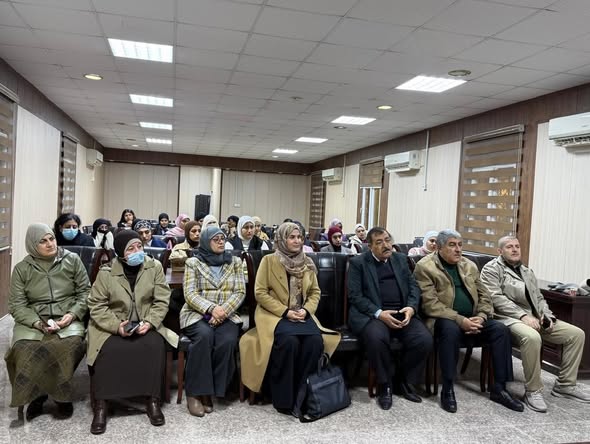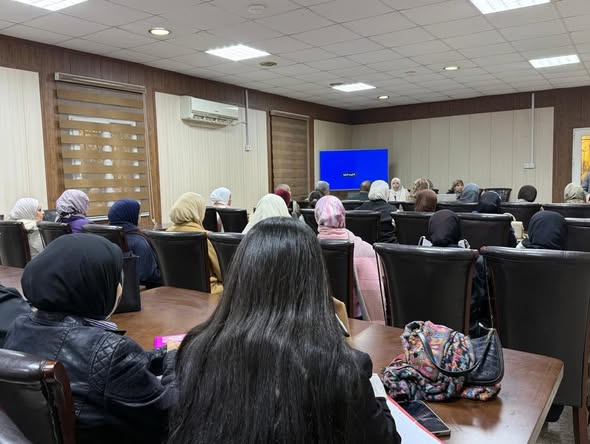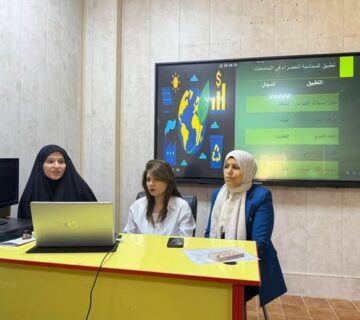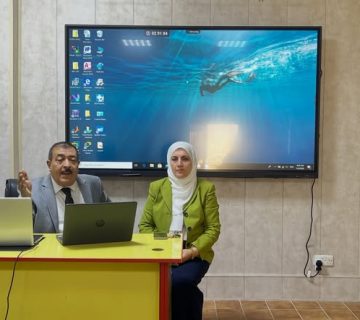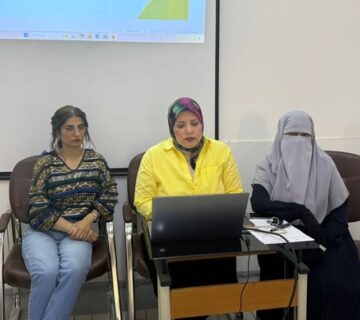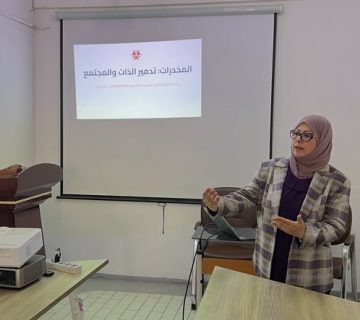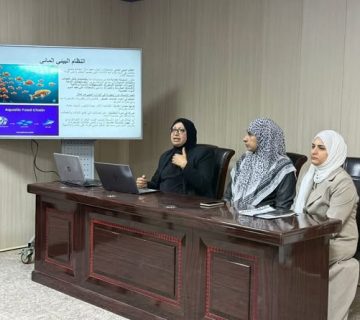
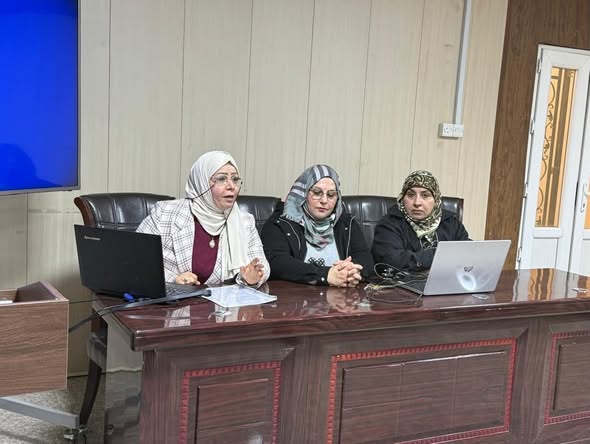
Under the patronage of the respected Dean of the College of Science for Women, Professor Dr. Samira Naji Kazem, the College hosted a scientific workshop entitled “The Role of Artificial Intelligence in Organic Chemistry.”
The workshop was prepared and presented by Professor Dr. Sanaa Hatoor Awad, Professor Dr. Sanaa Abdul Sahib, and Assistant Professor Dr. Areej Kamal, as part of the College’s scientific activities aimed at keeping pace with the rapid development in modern scientific research fields.
The workshop aimed to introduce the concept of artificial intelligence as one of the branches of computer science concerned with developing intelligent systems capable of simulating human cognitive abilities through learning from data, pattern analysis, and supporting problem-solving and decision-making processes, based on advanced algorithms and techniques.
The lecturers also addressed the role of artificial intelligence in the field of chemistry, particularly organic chemistry, highlighting its effective contribution to accelerating scientific discoveries and improving research efficiency. This is achieved through the design of new molecules, prediction of the physical and chemical properties of compounds, and optimization of chemical reactions, which has reduced the effort required for routine tasks and enhanced opportunities for scientific innovation.
The workshop reviewed the most prominent practical applications of artificial intelligence in drug discovery and design, as these technologies have significantly reduced the time previously required for such processes. In addition, they play a vital role in modeling complex chemical reactions and predicting the behavior of materials at the molecular level, thereby supporting the development of more accurate and efficient scientific experiments.
The workshop concluded by emphasizing the growing importance of artificial intelligence in the advancement of chemical sciences, due to its high accuracy and efficiency in analyzing large datasets and improving scientific research outcomes. It was noted that the continued development of these technologies will open new horizons for scientific research and industrial applications in the future.