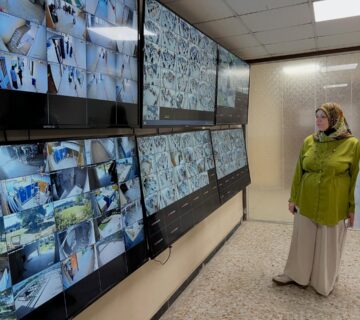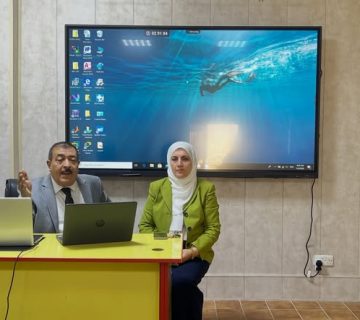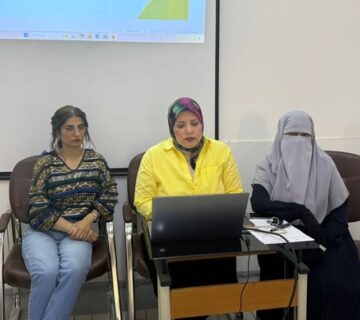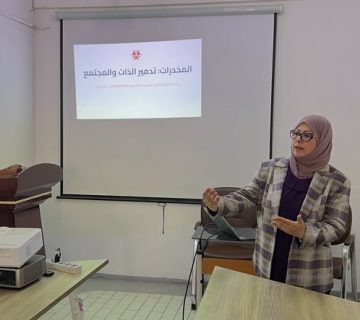
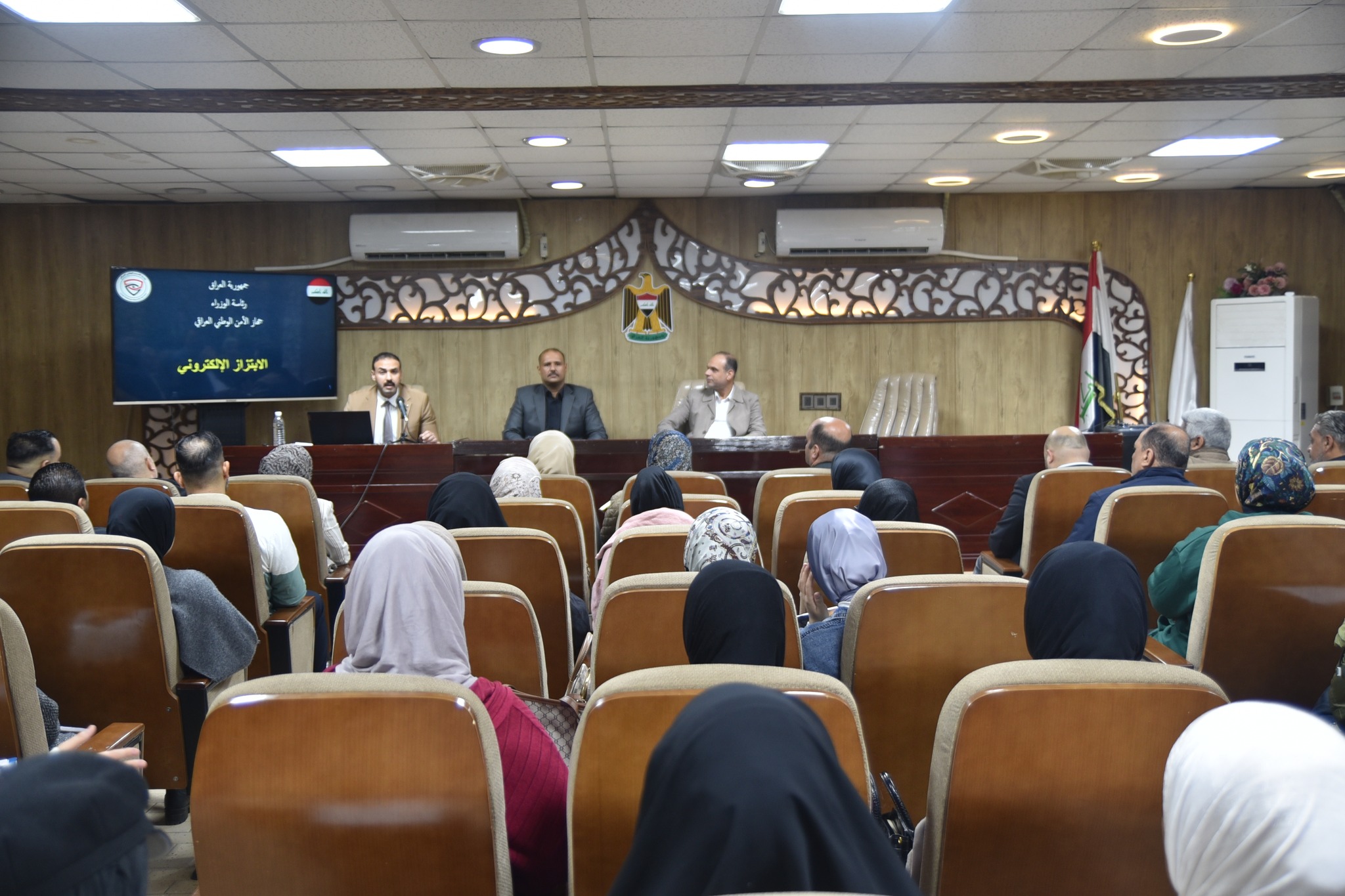
Under the patronage of the Dean of the College of Science for Women, Professor Dr. Sameera Naji Khdim , and in the presence of the Assistant Deans Dr. Salah Khairi Jaber and Dr. Nadia Mohammed Jawad, the Rehabilitation and Employment Unit, in cooperation with the Department of Computer Science and in coordination with a select group of members of the National Security Service, organized an awareness workshop entitled “Cybersecurity and Electronic Crimes: Understanding Risks and Prevention Methods.” The workshop was held on Monday, the eighth of December of the current year, in the Conference Hall.
The workshop was attended by a number of heads of departments and divisions at both the university and college levels. It aimed to raise awareness of the increasing cyber risks and the means of preventing them, particularly with regard to the phenomenon of electronic blackmail and its psychological, social, and legal repercussions.
The workshop provided a comprehensive definition of electronic blackmail as a form of threat or intimidation directed at the victim through the dissemination of photos or video clips via electronic platforms, with the intent of coercing the victim into performing certain actions, violating the law, or paying financial sums. The speakers also reviewed its main types, including emotional, financial, and occupational blackmail, while highlighting the most significant factors contributing to victimization, such as failure to register mobile SIM cards in the user’s name, negligence in digital privacy, the use of weak passwords, accessing untrusted websites, as well as the role of emotional vulnerability in falling prey to such crimes.
Furthermore, the speakers outlined a set of technical and legal measures that should be followed in cases of blackmail, including the necessity of preserving all evidence to substantiate the crime, seeking support from a trusted individual for psychological assistance and emotional regulation, and emphasizing the importance of reporting incidents to the competent authorities and refraining from yielding to the blackmailer’s threats, regardless of the pressure exerted.
In conclusion, the organizers emphasized the importance of strengthening digital literacy and promoting security awareness among various segments of the university community, as this contributes to reducing electronic crimes and protecting individuals from their risks. They also commended the constructive cooperation between the College and the National Security Service in ensuring the success of such awareness-raising activities.