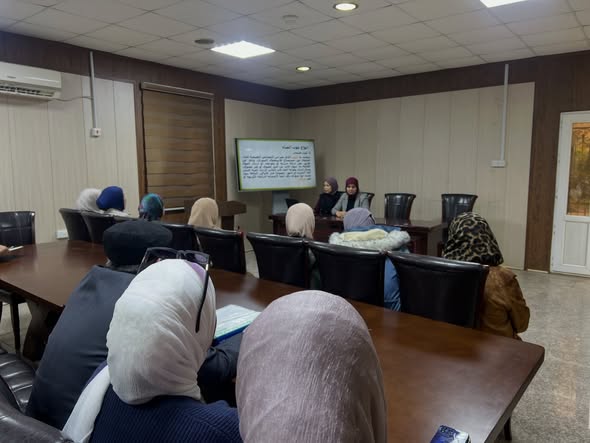
Under the patronage of the Dean of the College of Science for Women, Professor Dr. Sameera Naji Khdim, the Continuing Education Unit, in cooperation with the Department of Biology , organized a workshop entitled “Contaminated Water, Its Implications for Human Health, and the Role of Microorganisms in Its Treatment” in the Hospitality Hall, attended by a number of faculty members, staff, and students of the college.
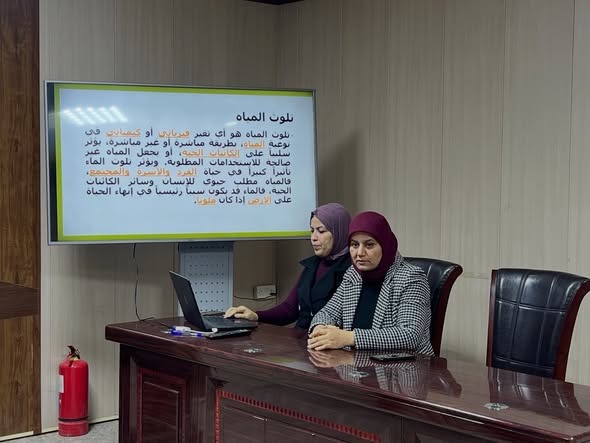
The workshop was presented by Dr. Abeer Mohammed Hussein and Ms. Noor Naeem Jassim. The presenters addressed water pollution as one of the most prominent environmental and health challenges facing societies at the present time, due to its direct and indirect impacts on human health and ecosystems.
The workshop included a presentation of the main sources of water pollution, such as industrial waste, untreated sewage water, and agricultural runoff containing pesticides and chemical fertilizers, in addition to domestic waste. The lecturers indicated that these pollutants contribute to the deterioration of water quality and lead to the spread of numerous diseases, including gastrointestinal illnesses, bacterial and parasitic infections, as well as long-term toxic effects on human health.
The workshop also addressed the vital role played by microorganisms in treating water pollution. It highlighted various types of bacteria, fungi, and microalgae capable of decomposing organic pollutants and converting them into substances less harmful to the environment. Furthermore, the mechanisms of bioremediation were explained, which rely on utilizing the natural capabilities of microorganisms to remove or reduce pollutant concentrations in water, thereby improving water quality and making it safer for human use.
In addition, several modern water treatment techniques based on biological systems were reviewed, such as biological filters and aerobic and anaerobic ponds. The importance of microbial monitoring of water to ensure its health safety was also emphasized.