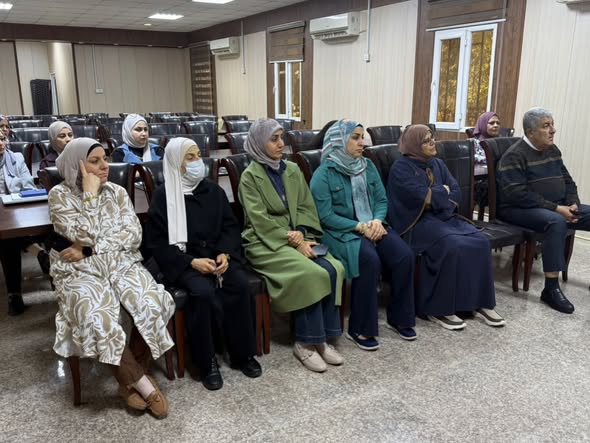
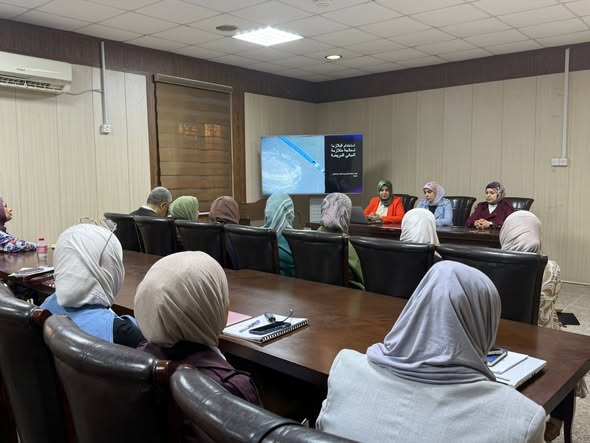
Under the patronage of the Dean of the College of Science for Women, Professor Dr. Sameera Naji Khdim , the Continuing Education Unit, in collaboration with the Department of Physics, organized a scientific workshop titled “Air Purification Using Plasma: An Innovative Solution to Reduce Sick Building Syndrome and Improve Indoor Air Quality.” The workshop was presented by Dr. Noor Yasoub Abdul Khader, Dr. Ruwaida Tareq Mahdi and Dr. Maysaa Rabea Naima.
The workshop aimed to clarify the concept of Sick Building Syndrome (SBS) and its relationship to indoor air quality, as well as to present potential solutions using cold plasma technology. Sick Building Syndrome is defined as the occurrence of health-related symptoms in individuals upon entering a particular building—whether an office or a residence—which tend to improve upon leaving the premises. Symptoms usually appear shortly after entering the building and are more prevalent in structures that rely on centralized ventilation systems with low rates of outdoor air exchange. Common symptoms include headaches, dizziness, fainting, insomnia, sleep disturbances, rhinitis or nasal congestion, and skin rashes.
The presenters highlighted that women are more susceptible to this syndrome than men. Additionally, the prevalence is higher among administrative and secretarial staff compared to technical managers, due to prolonged periods of sitting in offices during working hours, which increases their exposure risk. The syndrome’s impact is reflected in increased absenteeism due to illness, which, in turn, reduces work efficiency and productivity.
The workshop also addressed findings from international medical studies, indicating that exposure of women and children to indoor air pollution—particularly in areas where wood, crop residues, or other biomass materials are used as fuel—leads to a significant rise in the incidence of eye and nasal diseases, chronic obstructive pulmonary disease (COPD), and nasopharyngeal cancer.
The presenters explained that cold plasma, an ionized gas, effectively eliminates bacteria and viruses and is considered a modern technology for addressing air pollution, especially in buildings, offices, and enclosed spaces where individuals spend long hours. A comparison was made between cold plasma and ultraviolet (UV) radiation, with cold plasma demonstrating high efficiency in purification, surface treatment, and odor removal, in addition to being safe for human use when ozone-free.