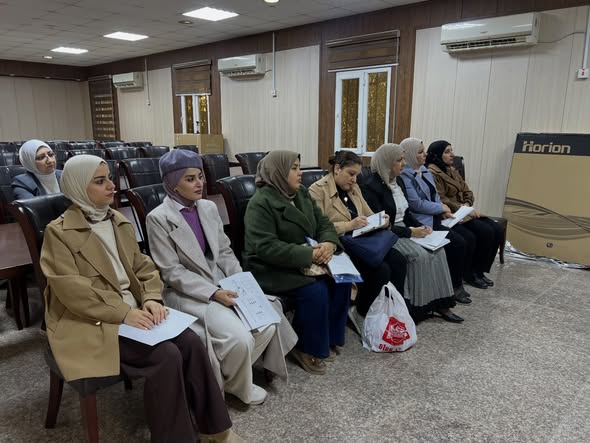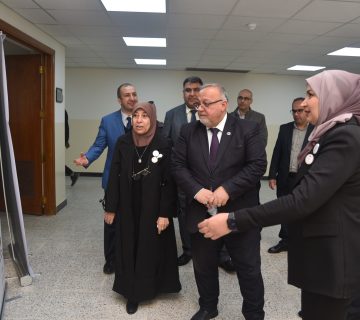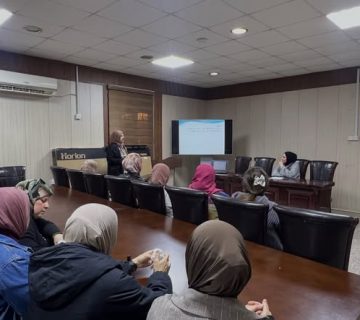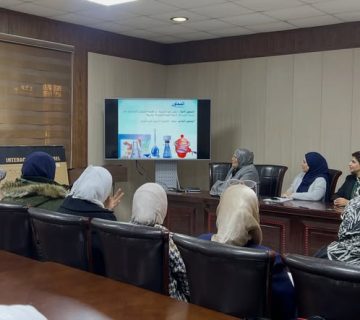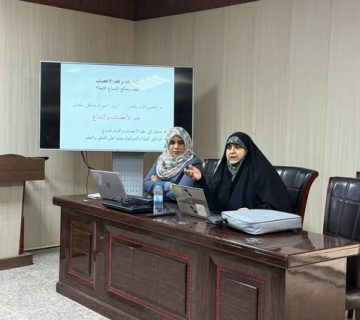
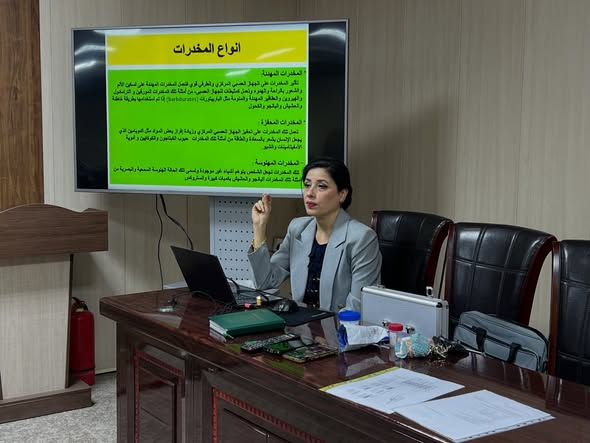
Under the patronage of the Dean of the College of Science for Women, Professor Dr. Samira Naji Kazem, the Continuing Education Unit, in cooperation with the Department of Biology, organized a scientific workshop entitled “Drugs: Types, Risks, and Laboratory Detection Methods.” The workshop was presented by Assistant Professor Dr. Rasha Majid Abdul Ameer in the college’s guest hall, with the attendance of faculty members, staff, and female students.
The workshop addressed the definition of drugs as chemical or natural substances that affect the human central nervous system, leading to changes in behavior as well as psychological and physical conditions. It explained that drugs can be classified into natural drugs such as cannabis and opium extracted from the poppy plant, synthetic drugs such as amphetamines and modern synthetic narcotics like ecstasy, and semi-synthetic drugs such as heroin and morphine.
The workshop also reviewed the risks of drugs on individuals and society, including health effects such as damage to the brain, liver, heart, and nervous system disorders. Psychological effects such as depression, anxiety, hallucinations, and reduced concentration were also highlighted, in addition to social consequences including isolation, job loss, family problems, and legal issues.
A practical session was included to explain laboratory drug detection methods. The latest scientific techniques for identifying narcotic substances in biological samples such as blood, urine, hair, and saliva were presented using chemical analysis and spectrometry devices, as well as strip and cassette testing methods. The importance of these techniques in early diagnosis and reducing addiction spread was emphasized.
At the conclusion of the workshop, a questionnaire was distributed to participants along with awareness guidelines and posters under the slogan “Say No to Drugs.” The workshop stressed the importance of continuous awareness among students and society about drug risks, prevention methods, and encouraging scientific research in early drug detection to help protect young people.