Master’s Discussion
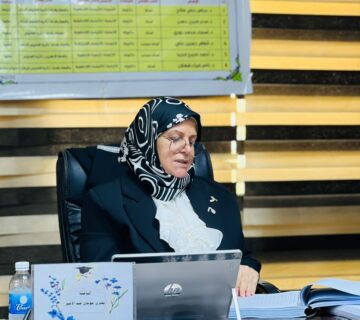
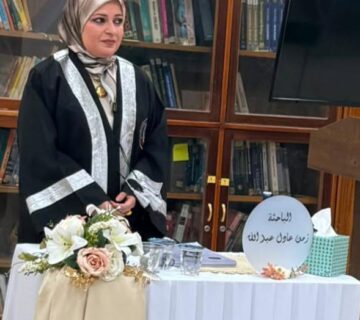
The College of Science for Women at the University of Baghdad discussed the master’s thesis entitled ( Modifying and Characterizing New Pharmaceutical Polymeric Derivatives of Some Natural Polymers and Studying Their Effect on Cancer Cells and Biological Activity ) by the student Safa Mohammed Jasim, on 11/8/2026, at library Hall.
By the student: Safa Mohammed Jasim.
- To prepare modified starch derivatives (S1 and S2) and load selected drugs onto the modified polymer S2 to obtain new polymer-drug derivatives.
- To synthesize Schiff bases of amoxicillin using selected aromatic aldehydes and conjugate them with the modified polymer S2, as well as prepare chitosan Schiff bases and conjugate them with the same polymer.
- To extract eugenol from clove, characterize it by HPLC, conjugate it with polymer S2, and prepare ester derivatives with selected pharmaceutical compounds.
This study was conducted at the University of Baghdad / College of Science for Women / Department of Chemistry. The experimental work included starch modification by acetylation followed by reaction with maleic anhydride, preparation of polymer-drug derivatives, synthesis of amoxicillin and chitosan Schiff bases and their conjugation with the modified polymer, and extraction and characterization of eugenol followed by its conjugation with the polymer and preparation of drug derivatives. The synthesized compounds were characterized using FT-IR, ¹H-NMR, UV-Visible, HPLC, and TGA. Their biological activities were evaluated against Gram-positive and Gram-negative bacteria and fungi, while anticancer activity was studied against MCF-7 cells together with molecular docking studies.
- Synthesize additional polymeric derivatives using different bioactive drugs, aldehydes, and natural compounds to further enhance biological activity and therapeutic performance.
- Investigate the drug-release behavior of the prepared polymeric systems under physiological conditions to evaluate their suitability as controlled-release drug delivery systems.
- Conduct further in vivo studies to assess the pharmacological efficacy and safety of the most active compounds and apply additional characterization techniques such as SEM, TEM, XRD, and molecular dynamics simulations.
- Expand antimicrobial studies against a broader range of pathogenic microorganisms and evaluate the prepared compounds against different cancer cell lines.