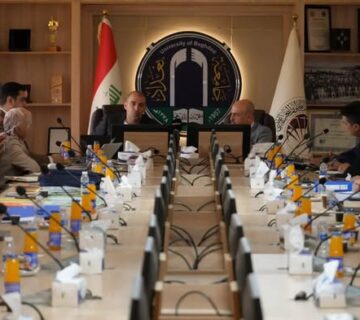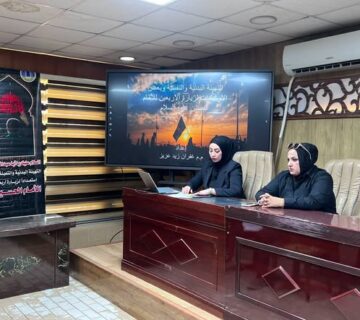

Under the patronage of Prof. Dr. Sameera Naji Khdim, Dean of the College of Science for Women, the College held the regular meeting of its Industrial Advisory Council on Tuesday, July 7, 2026, in the presence of the Council members and a number of specialists. The meeting was held as part of the College’s efforts to strengthen cooperation and integration between the academic institution and public- and private-sector organizations.
The session commenced with a welcoming address delivered by the Dean, in which she emphasized the strategic importance of the role played by the Industrial Advisory Council in developing academic programs and aligning them with labor market requirements. Such efforts contribute to preparing competent graduates capable of keeping pace with rapid developments across various scientific and technological fields.
The Assistant Dean for Scientific and Student Affairs, Assistant Professor Dr. Nadia Mohammed Jawad, also delivered a detailed presentation outlining the Council’s functions and objectives. She highlighted its pivotal role in updating academic curricula in accordance with scientific developments and labor market needs, in addition to serving as an effective platform for exchanging expertise and strengthening integration between academic knowledge and practical application.
The meeting featured a number of constructive proposals and ideas put forward by Council members. Discussions focused on developing the educational and research environment, enhancing the quality of academic outcomes, expanding cooperation with the industrial and banking sectors, and strengthening opportunities for students to receive practical training. The participants also discussed directing graduation projects and scientific research toward addressing the needs of productive and service-oriented institutions.
At the conclusion of the meeting, the Dean reaffirmed the College’s commitment to advancing its academic and developmental plans, including the introduction of specialized programs and the updating of academic curricula in line with labor market requirements and recent scientific developments. These efforts are intended to further strengthen the College’s academic standing and its leading role in serving the community and supporting sustainable development.