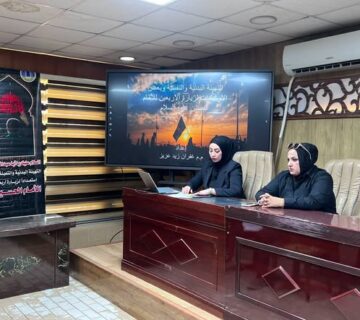

Under the patronage of Prof. Dr. Sameera Naji Khdim, Dean of the College of Science for Women, the Continuing Education Unit, in cooperation with the Department of Chemistry, organized a workshop entitled “Autism Spectrum Disorder and Its Relationship to Minerals.” The workshop was presented by Dr. Samia Jumaa Khamas and Dr. Inaam Fadhil Musa. It was held in Abdul Hakim Hall and attended by a number of faculty members, staff, and female students.
The workshop explained Autism Spectrum Disorder (ASD) as a spectrum condition, meaning that children diagnosed with autism may differ considerably in their abilities, challenges, and behaviors, even when they share the same medical diagnosis. Each child may possess distinct skills and characteristics related to intellectual abilities, social skills, language development, or sensory sensitivity.
The workshop also highlighted several symptoms and characteristics associated with autism spectrum disorder, including difficulty understanding the emotions of others, limited interaction with peers, repetitive movements and behaviors, avoidance of eye contact, and challenges in communication and social interaction.
A significant part of the workshop focused on the relationship between autism and minerals and their concentrations in the body. It explained that minerals are essential chemical elements required by the human body in specific amounts to perform vital physiological functions. These include iron, zinc, selenium, and other essential elements necessary for healthy growth and proper development of the body and brain.
The workshop further noted that some scientific studies have reported associations between disturbances in mineral balance and autism spectrum disorder in certain individuals. Accordingly, accurate diagnosis and appropriate laboratory investigations under the supervision of a qualified medical specialist are essential for identifying any potential nutritional deficiencies. Where deficiencies are confirmed, they may be addressed through appropriate nutritional supplementation under medical supervision. Such measures may contribute to improving the child’s overall health and supporting healthy growth and development.