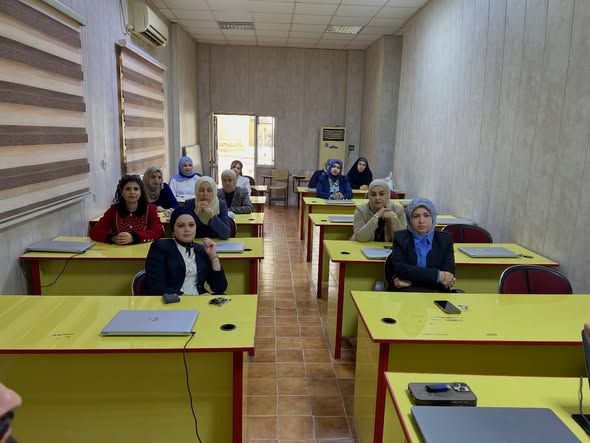
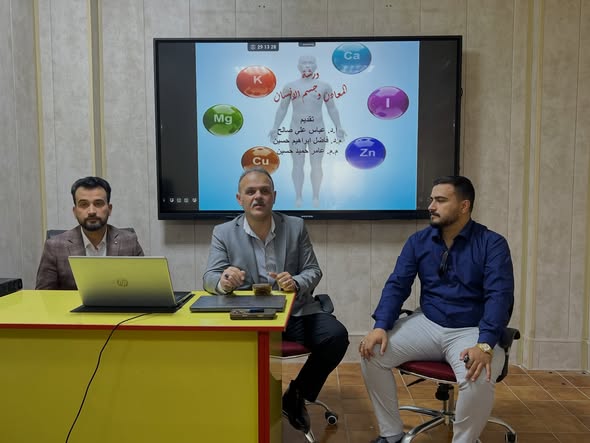
A workshop entitled “Minerals and the Human Body” was organized by the Continuing Education Unit in collaboration with the Department of Chemistry, under the patronage of the Dean of the College of Science for Women, Professor Dr. Sameera Naji Khdim. The workshop was presented by Dr. Abbas Ali Saleh, Dr. Fadhil Ibrahim Hussein, and Mr. Amer Hamid Hussein. It was held in Abdul Hakim Hall and attended by a number of faculty members, staff, and female students.
The workshop addressed the importance of minerals in the human body as essential elements indispensable for maintaining vital functions. Minerals play a central role in the formation of bones and teeth, the regulation of muscular and nervous system functions, and contribute to supporting the immune system and maintaining fluid balance within the body. The session also discussed the types of minerals required by the body, which are classified into macrominerals—such as calcium, potassium, and magnesium—and trace minerals, including iron, zinc, and iodine. Although required in smaller quantities, trace minerals are equally vital.
During the workshop, emphasis was placed on the health effects resulting from imbalances in mineral levels, سواء due to deficiency or excess. For instance, iron deficiency leads to anemia, accompanied by fatigue and general weakness, while excessive intake of certain minerals, such as sodium, may cause hypertension, and excess calcium may result in kidney-related problems. Accordingly, the importance of maintaining a precise balance of minerals in the body was highlighted as a fundamental factor in preserving overall health.
The workshop further stressed the necessity of conducting medical examinations and laboratory tests prior to taking any dietary supplements, in order to determine the body’s actual needs and to avoid side effects associated with random or excessive use. Overconsumption of minerals without medical consultation may lead to serious health complications, whereas their appropriate and supervised use can enhance health and help prevent various diseases.
In conclusion, the organizers recommended promoting health awareness within the community and enhancing understanding of the importance of a balanced diet rich in minerals. They emphasized relying primarily on natural sources, while resorting to dietary supplements only when necessary and under professional supervision.
The workshop witnessed notable engagement from attendees through questions and discussions, which were addressed by the presenters.