Dissertation Discussion
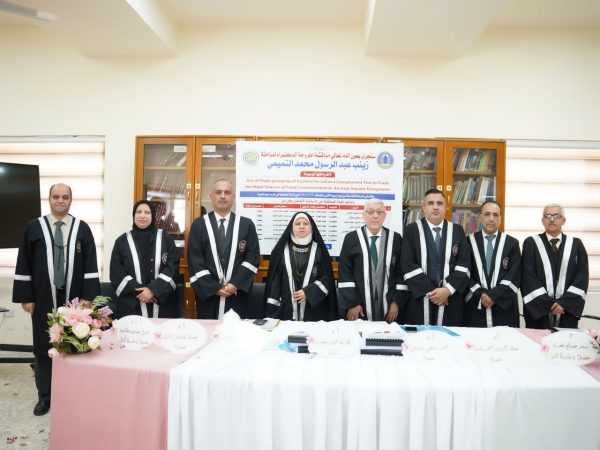
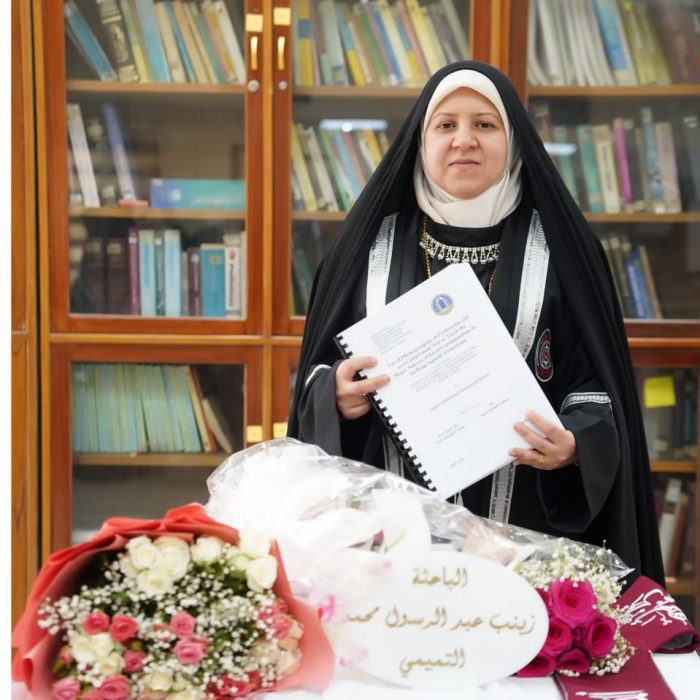
College of Science for Women / University of Baghdad discussed the dissertation entitled (Using Phylogrouping of Escherichia coli as a Complementary Test for Tracking Some Sources of Fecal Contamination in the Middle Part of Euphrates River / Iraq) of the student (Zainab Abdulrasool Mohammed Hassan) in a Partial Fulfilment of the Requirements for the Degree of Doctor of Philosophy in Biology / Ecology, supervised by Asst. Prof. Dr. Adel Hussain Talib, and Senior Scientific Researcher Dr. Saad Sabah Fakhry
dissertation aims to assess the spread of phylogenetic groups, virulence genes, pathotypes, and antibiotic resistant of Escherichia coli (E. coli) isolated from the Euphrates River, human and animal feces in central Iraq, to determine the sources of river pollution and the relationship between their strains and waterborne diseases. A set of physical and chemical parameters was also measured.
The dissertation also employed morphological, microscopic, biochemical, and molecular methods to identify the isolates. E. coli isolates were classified into major phylogenetic groups based on the quadruplex Polymerase Chain Reaction (PCR) patterns of amplification of certain genetic markers (arpA, chuA, yjaA, and TspE4.C2). The isolates were categorized into one of seven phylogenetic groups: A, B1, B2, C, D, E, and F. Phylogroup B2 was the predominant of E. coli isolates in both the Euphrates River isolates and the non-environmental isolates. The pathotype patterns of E. coli isolates were determined based on the presence of 16 virulence genes. Adherent Invasive E. coli (AIEC) was the most common, and six Intestinal Pathogenic E. coli (IPEC) were also recorded. Additionally, three Extraintestinal Pathogenic E. coli (ExPEC) were identified. Strains belonging to group B2 were found to possess the largest reservoir of virulence genes. Regarding antibiotic resistance, the highest resistance was recorded to ampicillin, followed by cefotaxime, and the lowest to meropenem, in addition high multidrug resistance. The recorded values for the Antibiotic Resistance Index exceeded the threshold
The most important recommendations which the study has come up with and the average obtained:
The most important finding of the study is a significant positive correlation between the distribution of phylogroups in river and non-environmental isolates was observed, indicating that animal waste plays a vital role in fecal contamination of the river, in addition to the direct impact of sewage. This suggests a pathway for the transfer of antimicrobials from animal and human feces, which are their reservoirs, to the environment. Therefore, immediate measures are required to alleviate the effects and protect human and aquatic health. Continuous oversight, strategic management practices, and cooperative initiatives are essential for the river’s sustainability for present and future generations.
the average obtained: excellent