The Continuing Education Unit organized a scientific workshop entitled “The Impact of Technology on the Arabic Language: Phonetics”, under the patronage of the Dean of the College of Science for Women, Professor Dr. Samira Naji Kazem.
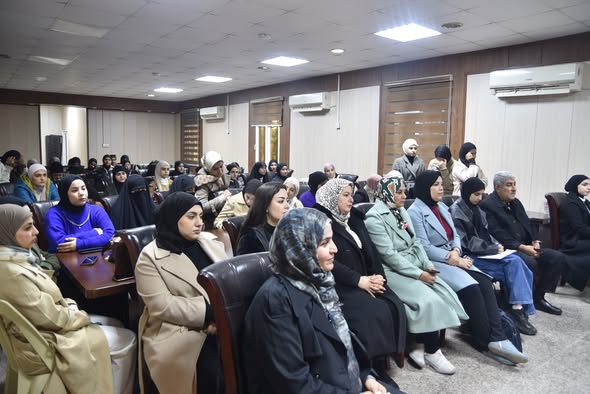
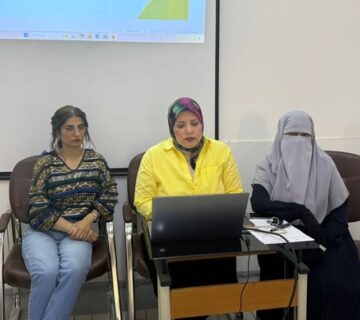
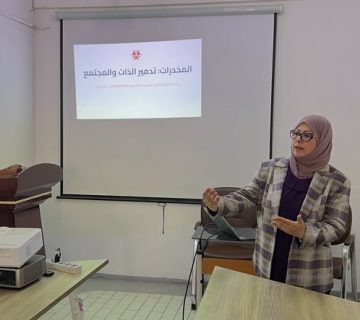
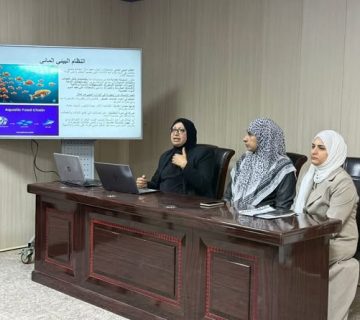
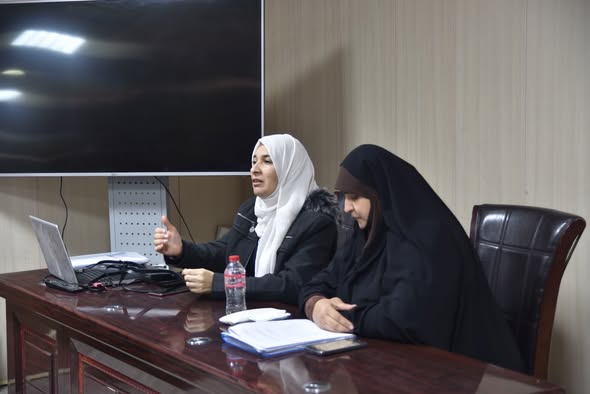
The workshop was held in the Guest Hall with the participation of a number of faculty members, staff, and female students of the college.
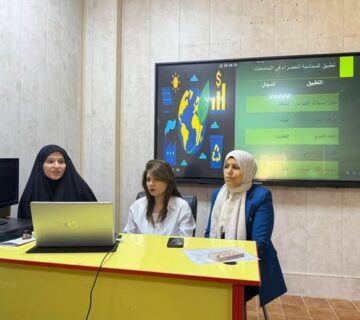
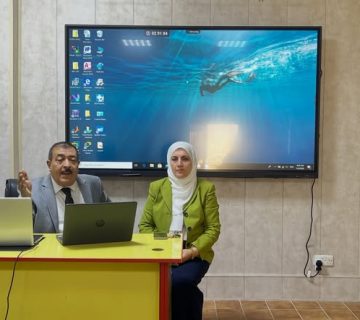
The workshop was presented by Ms. Salma Dawood Salman from the Department of Biology and Assistant Professor Dr. Mirvat Yousif Kazem from the College of Education for Women.
The workshop addressed the growing role of technology in facilitating access to information and providing digital services through social media platforms and various educational platforms. It also discussed the challenges facing the Arabic language as a result of the increasing use of local dialects, technical abbreviations, and borrowed Arabized terms, which has led to a decline in the use of Classical Arabic in digital correspondence.
The workshop emphasized the importance of the Arabic language as the language of the Holy Qur’an, highlighting its linguistic richness and solid grammatical foundations. It stressed the necessity of proper mastery of its rules and awareness of common linguistic errors, particularly among students, as they represent an active segment of the scientific community.
The importance of caring for language accuracy in writing scientific research and reports was also emphasized, along with the use of precise terminology and achieving a balance between authenticity and modernity in order to preserve the identity of the Arabic language.
In addition, the workshop discussed phonetics and its role in the formation of words and sentences, explaining that some sounds are characterized by ease of pronunciation, while others possess strength and a clear impact on the listener.
At the conclusion of the workshop, a set of mechanisms and proposals were presented to enhance the global presence of the Arabic language through the development of Arabic digital educational platforms, thereby strengthening its status in the digital age.